FOCUSED ON THE DEVELOPMENT OF TRANSFORMATIVE THERAPIES FOR THE TREATMENT OF :
Worsening heart failure
Hyponatremic acute heart failure
Worsening heart failure
Worsening heart failure
Worsening heart failure
AVP
Biology
AVP signaling plays a central role in the pathophysiology of ADPKD by
- binding to renal V2 receptors, upregulating cAMP, enhancing cyst proliferation and intracystic fluid secretion,
- activation of V1a receptors on vascular smooth muscle cell (VSMC) promoting vasoconstriction and hypertension,
- stimulating V1a receptors in the interstitial inner medullary cells, increasing the production of vasodilatory prostaglandins and medullary blood flow
- high CNS levels of AVP decreases the thirst threshold leading to excessive water intake, plasma volume expansion, further increasing congestion and accelerating the development of heart failure
Elevated circulating vasopressin concentration has been reported in heart failure (HF) patients and in preclinical HF models. High vasopressin levels contribute to
- Deterioration of cardiac function through V1a receptor
- Systemic congestion and hyponatremia through V2 receptor
- Glucose metabolism impairment and increased sympathetic tone through its third receptor V1b.
Strategy
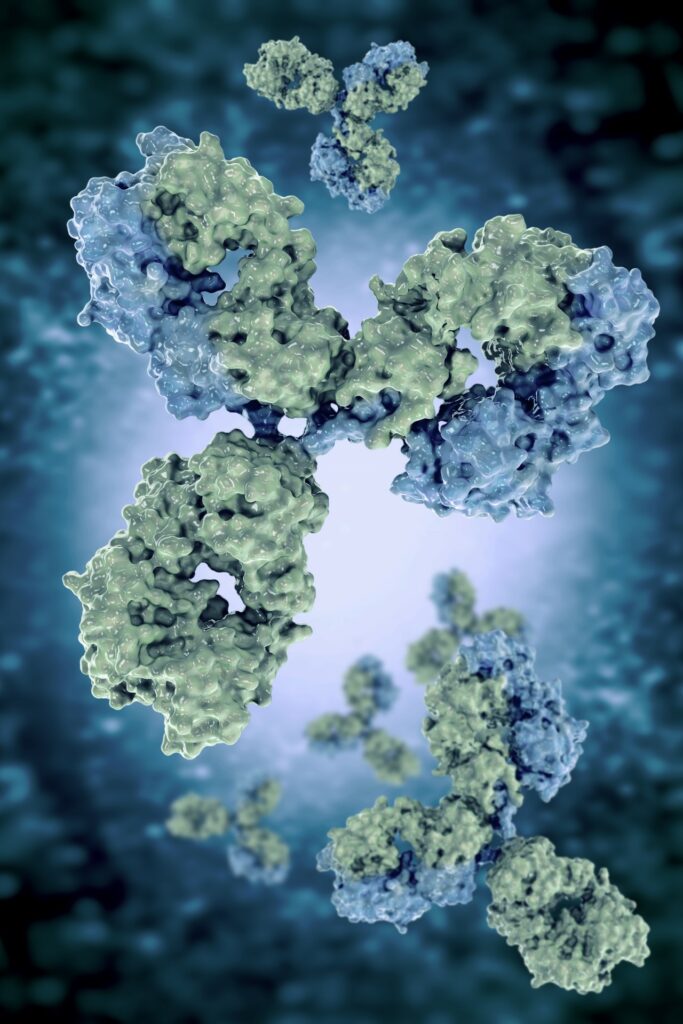
In order to inhibit the full spectrum of vasopressin activity, its 3 receptors (V1a, V1b and V2) should be equally blocked to avoid the overstimulation of an unblocked receptor subtype. This has not been achieved with small molecule receptor or peptide antagonist approach. The alternative strategy we are pursuing is to selectively neutralize vasopressin with a human monoclonal antibody that will suppress activation of the 3 receptor subtypes. The expected rapid benefit would be
- The modification of the disease course in ADPKD without the excessive thirst and polyuria or liver toxicity observed with V2 receptor antagonist.
- the restoration of normal natremia in AHF patients with the reduction of intravascular and tissue congestion.